
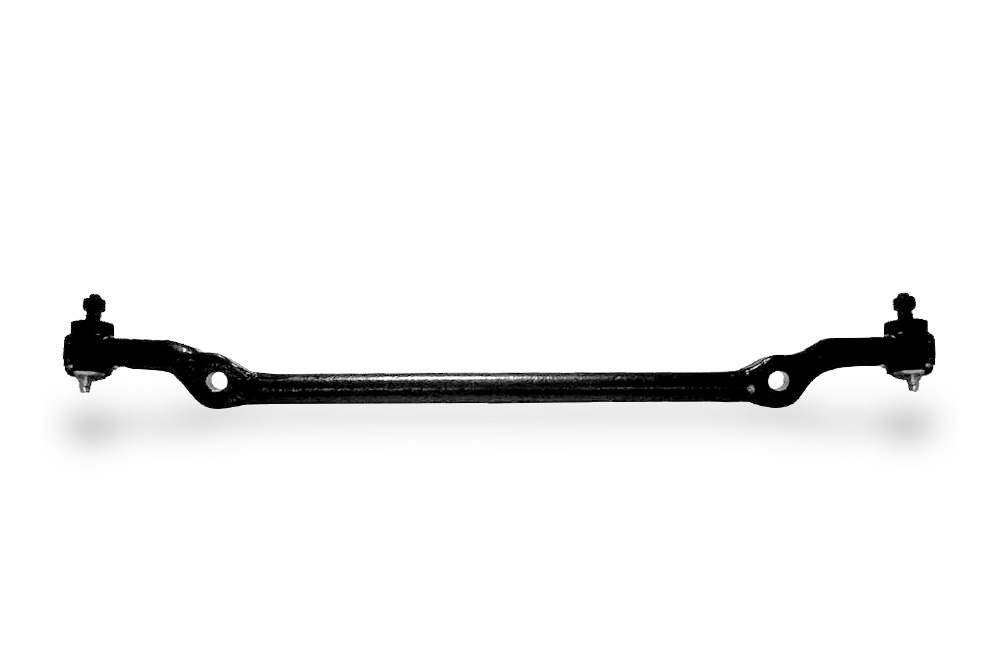
Drag Links
Suspensia drag links are built for the demanding requirements of commercial and heavy-duty vehicles.
Our heavy-duty construction ensures reliable steering performance under the toughest conditions.
Overview
The drag link converts the sweeping arc of the steering arm to linear motion in the plane of the other steering links.
Typically, one end of the drag link is connected via the Pitman arm and steering gearbox to the steering wheel (providing the connection between the driver and the steering system); the other end is attached to the steering linkage, by the steering arm.
Drag Links consist of a long bar that provides a means of connecting the tie rods together, forming one big moveable linkage system.
Key Features
- Heavy-duty construction
- Complete assemblies
- Adjustable length options
- Premium materials
- Commercial vehicle applications

Frequently Asked Questions
What is a drag link and what does it do?
The drag link is the long connecting rod that bridges the pitman arm to the steering arm (or center link), converting the sweeping arc of the pitman arm’s motion into the linear movement needed to steer the wheels. One end connects to the pitman arm and steering gearbox — linking the driver’s input to the system — and the other end connects to the steering linkage via the steering arm. Together with the pitman arm and tie rods, the drag link forms one continuous, moveable steering linkage system. When it wears or develops play, the precision and safety of the entire system are compromised.
What's the difference between a drag link and a tie rod?
A drag link connects the pitman arm to the steering arm, transferring the steering gear’s output to the wheel end of the linkage. A tie rod connects the steering arms between the two front wheels, keeping them moving in sync. In some steering configurations, the drag link runs directly to the steering knuckle arm; in others, it connects to a center link that then distributes motion via tie rods. Both are part of the same steering system but perform distinct roles.
How do I know if my drag link needs to be replaced?
Common symptoms include loose, wandering, or unresponsive steering, excessive play in the steering wheel before the wheels react, a clunking or popping sensation when turning or going over bumps, and front-end shimmy or vibration. A worn ball socket at either end of the drag link is usually the root cause. A technician can confirm wear by checking for play in the drag link ends with the vehicle raised.
Are Suspensia drag links exact-fit replacements?
Yes. Suspensia drag links are manufactured to be exact-fit for their specific applications through thorough development and verification — covering correct length, end geometry, stud taper, and thread specifications for a direct, no-modification installation.
How are Suspensia drag links constructed?
Suspensia drag links are built using advanced robotic welding and assembly processes and are thoroughly tested to meet or exceed the performance of the original equipment parts they replace. Each unit also features a corrosion-resistant finish to protect against road salt, moisture, and harsh weather conditions.
Are Suspensia drag links manufactured to OE standards?
Yes. All Suspensia parts are manufactured in IATF 16949 certified facilities to meet or exceed original equipment standards for fit, function, and durability — the same certification standard used by OE suppliers worldwide.
Do I need a wheel alignment after replacing a drag link?
Your content goes here. Edit or remove this text inline or in the module Content settings. You can also style every aspect of this content in the module Design settings and even apply custom CSS to this text in the module Advanced settings.
Should I inspect other steering components when replacing a drag link?
Absolutely. The drag link works as part of a complete steering linkage system alongside the pitman arm, tie rod ends, and center link. If the drag link has worn to the point of replacement, adjacent components should be inspected — particularly the pitman arm and tie rod ends — as they experience similar stress cycles and often wear at comparable rates.
What vehicles use a drag link?
Drag links are found primarily on trucks, larger SUVs, and four-wheel-drive vehicles that use a solid front axle and recirculating ball steering gear — rather than a rack-and-pinion system. Common applications include heavy-duty pickups like the Dodge Ram, Ford F-Series, and GM trucks, as well as off-road-capable vehicles where the drag link-style steering linkage is preferred for its durability under load.
Is drag link replacement a DIY job?
Drag link replacement requires a ball joint separator or pickle fork to disconnect the tapered studs at each end, along with basic hand tools and a torque wrench. For experienced DIYers with the right equipment, it’s manageable. However, the required post-repair wheel alignment must be done professionally, so plan accordingly.
What causes drag links to wear out?
The ball sockets at each end of the drag link are the primary wear points. Road impacts, off-road use, and high mileage all accelerate wear. Torn or deteriorated boots at the ball socket ends allow moisture and road debris to contaminate the joint, significantly shortening service life. Vehicles driven in high-salt or muddy environments are especially susceptible.
Are drag links more common on trucks and off-road vehicles?
Yes. The drag link steering configuration is most commonly found on trucks, SUVs, and four-wheel-drive vehicles with solid front axles — platforms that demand durability under heavier load conditions than typical passenger cars. This also makes drag link quality and fitment especially critical on vehicles used for towing, hauling, or off-road driving.
What happens if I ignore a worn drag link?
A worn drag link introduces play and imprecision into the entire steering system, causing worsening steering response and putting additional stress on connected components like the pitman arm and tie rod ends. In an advanced state of failure, a drag link can separate at a ball socket end — resulting in sudden, complete loss of steering control.
Can a bad drag link cause my vehicle to fail a safety inspection?
Yes. Measurable play or damage in the steering linkage — including drag link ball sockets — is grounds for rejection in most states. If your steering has developed looseness or your front end is exhibiting shimmy, have the drag link inspected before your next inspection date.
Are Suspensia drag links covered by a warranty?
Yes. Suspensia drag links are backed by a warranty covering defects in materials and workmanship. The warranty is non-transferrable. Check your specific part listing or contact your distributor for applicable terms.
Where can I buy Suspensia drag links?
Suspensia drag links are available through authorized aftermarket distributors and major parts retailers.